
AI Mobility Operations Platform
QDrive
AI Mobility Operations Platform
QDrive
Tachograph, diagnostic, location and energy data read by AI — improving safety, efficiency, charging and carbon performance.
Overview
Turning what the vehicles record into better operation
Driving and diagnostic data show risky driving — and how you are doing on cost and carbon.

Driving and safety analysis
Speed, harsh acceleration and braking reveal risky driving and where it can improve
Energy and charging
Battery and energy use are watched, and charging and discharging schedules tuned
Carbon management
Distance and energy data give the emissions figure — and the reduction achievedFeatures
AI points to the next action in mobility operations
Operators, fleet managers, and drivers work from the same data to reduce risk and waste.
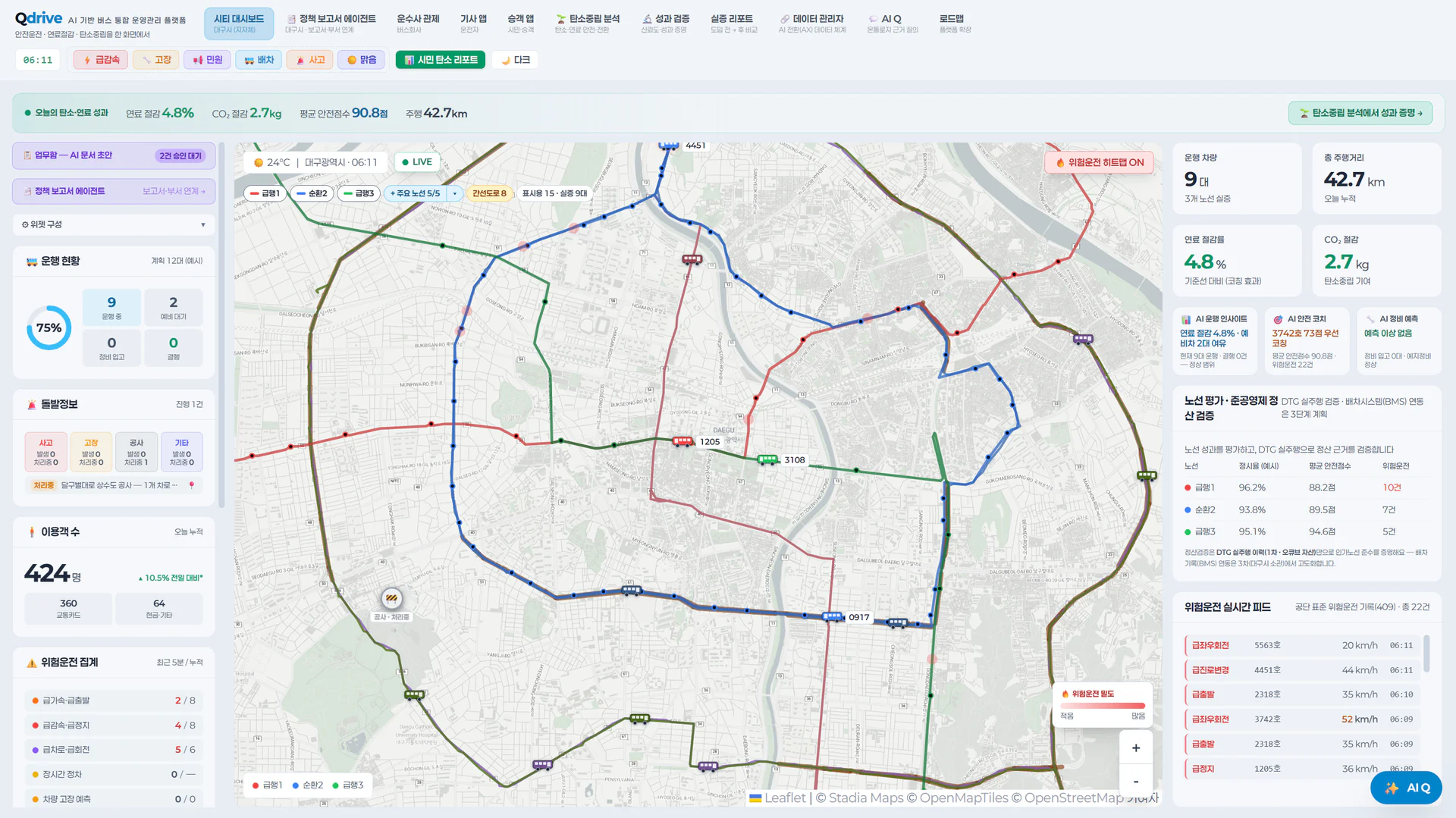
Fleet-wide control
Combine location, trip state, incidents, faults, and risky-driving events to see the whole fleet and what needs attention first.
- Live overview
- See location, utilisation, operating state, and incidents on maps and metrics
- Risk hotspot analysis
- Read repeated harsh manoeuvres in the context of weather and roads
- Performance comparison
- Compare safety, fuel, and efficiency by vehicle, driver, and route
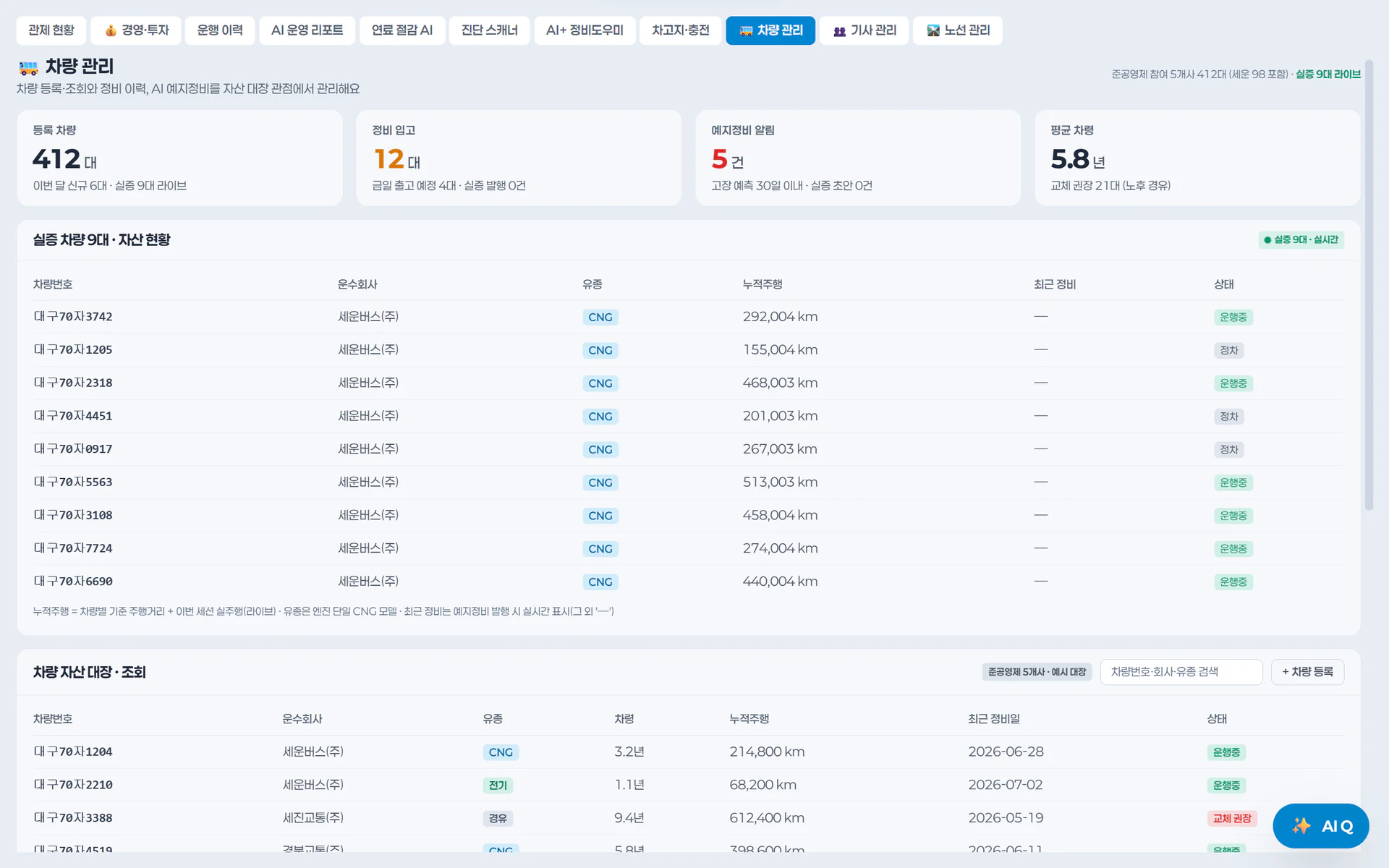
Vehicle and driver operations
Organise each vehicle's status and history, then catch fault signals early to manage maintenance timing from the asset register.
- Vehicle asset register
- View vehicle number, fuel type, age, mileage, and latest service in one record
- Predictive maintenance
- Use OBD and CAN signals to anticipate faults and maintenance timing
- Status and service history
- Attach driving, parked, inspection-needed, and work-order history to each vehicle
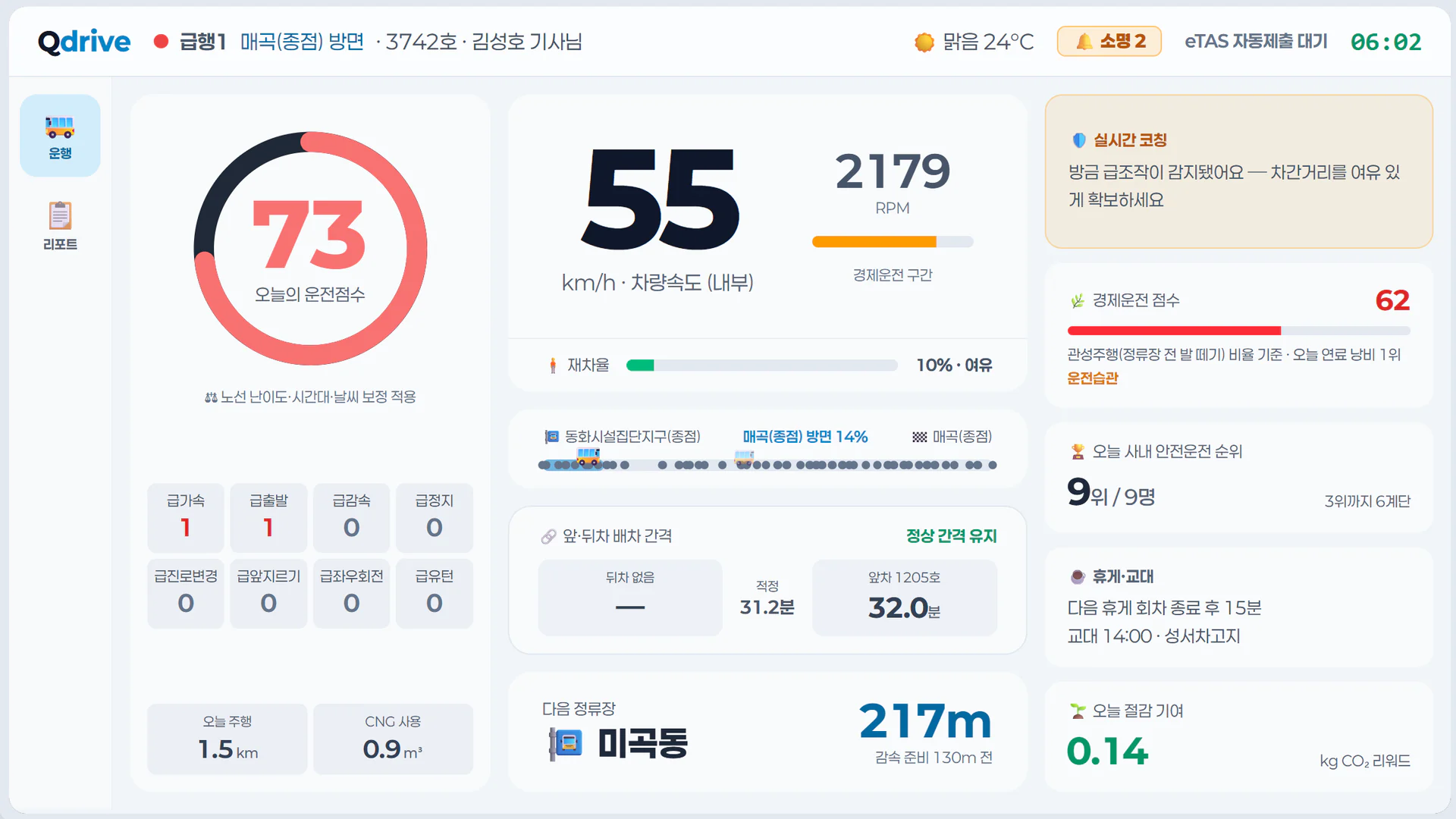
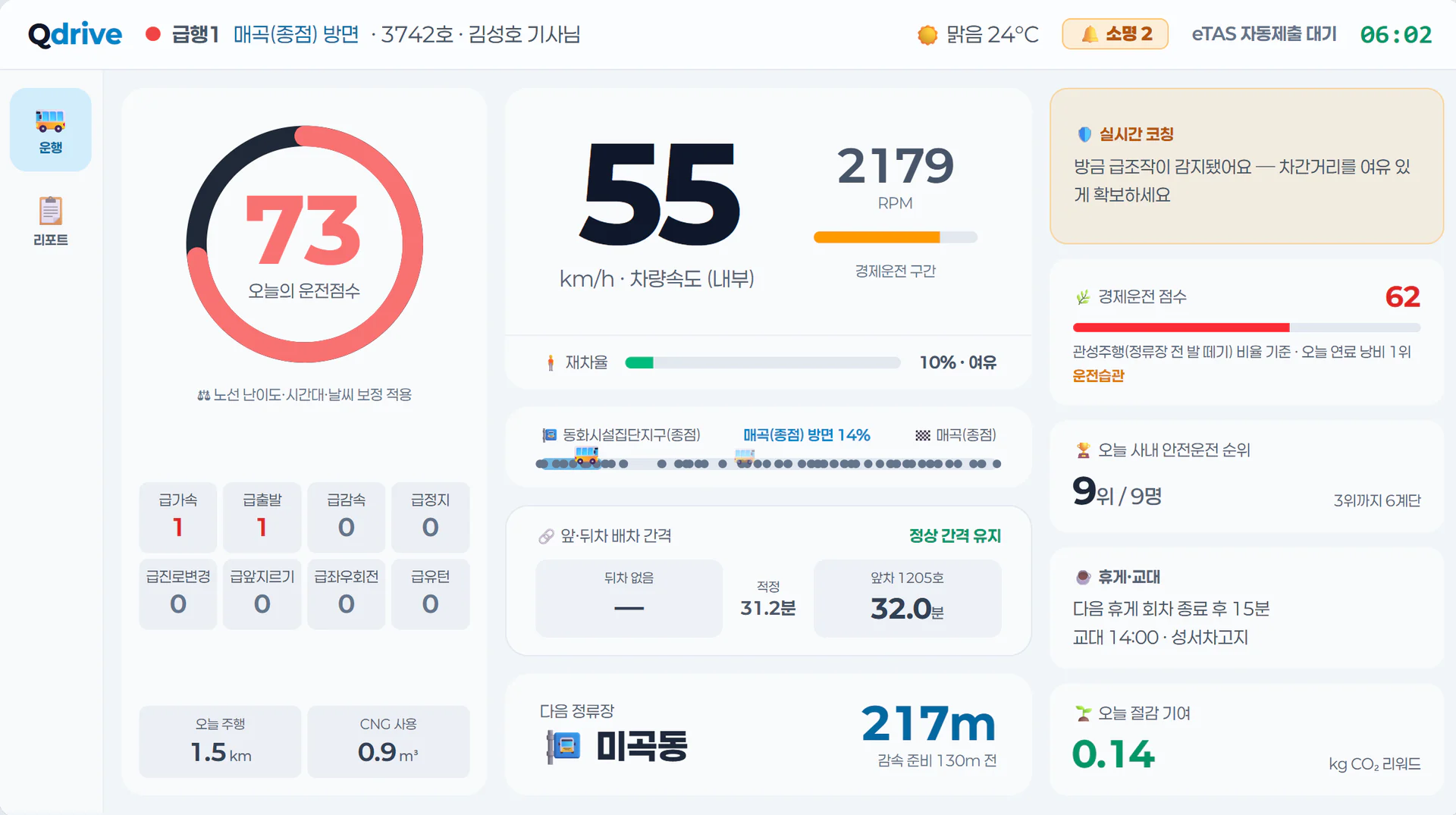
Driver dashboard
Bring together only what a driver needs while on the road, so safer driving and fuel-economy management need no extra operation.
- Live driving score
- A score adjusted for route difficulty, time, and weather, plus eight risky-driving event counts
- Instant coaching
- Guide the next improvement action when high RPM or harsh control is detected
- Driving context
- Show speed, passenger load, headway, next stop, and shift time together
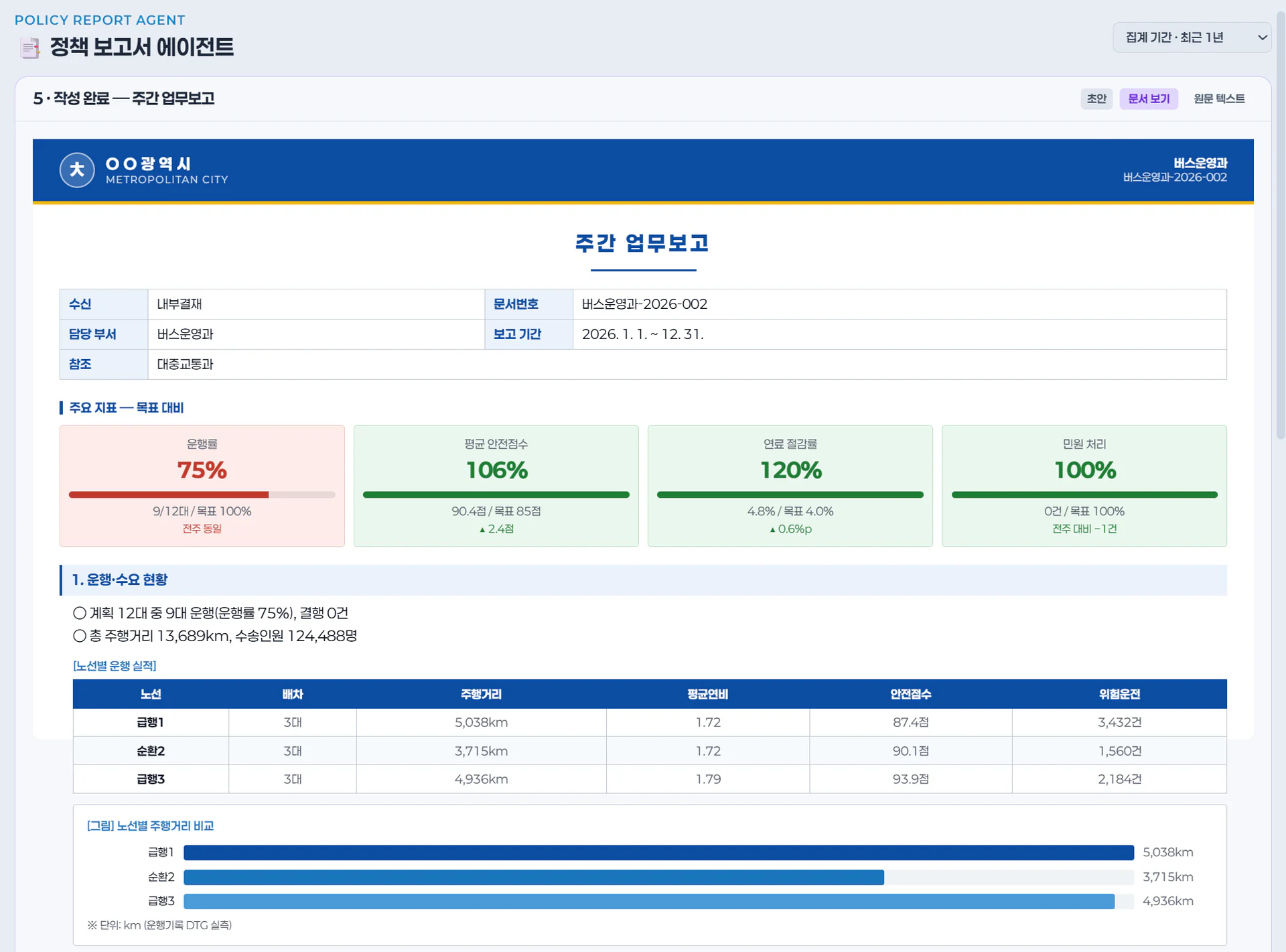
Policy report agent
Aggregate trip data into a report draft, complete with document formatting, then carry it through review, approval, and delivery to the right department.
- Automatic report drafting
- Create brief-style narrative and tables from operational, safety, and fuel metrics
- Approval and document vault
- Submit a draft for approval and reopen the finished document by its document number
- Department handoff
- Send data-backed improvement proposals to the responsible department after approval
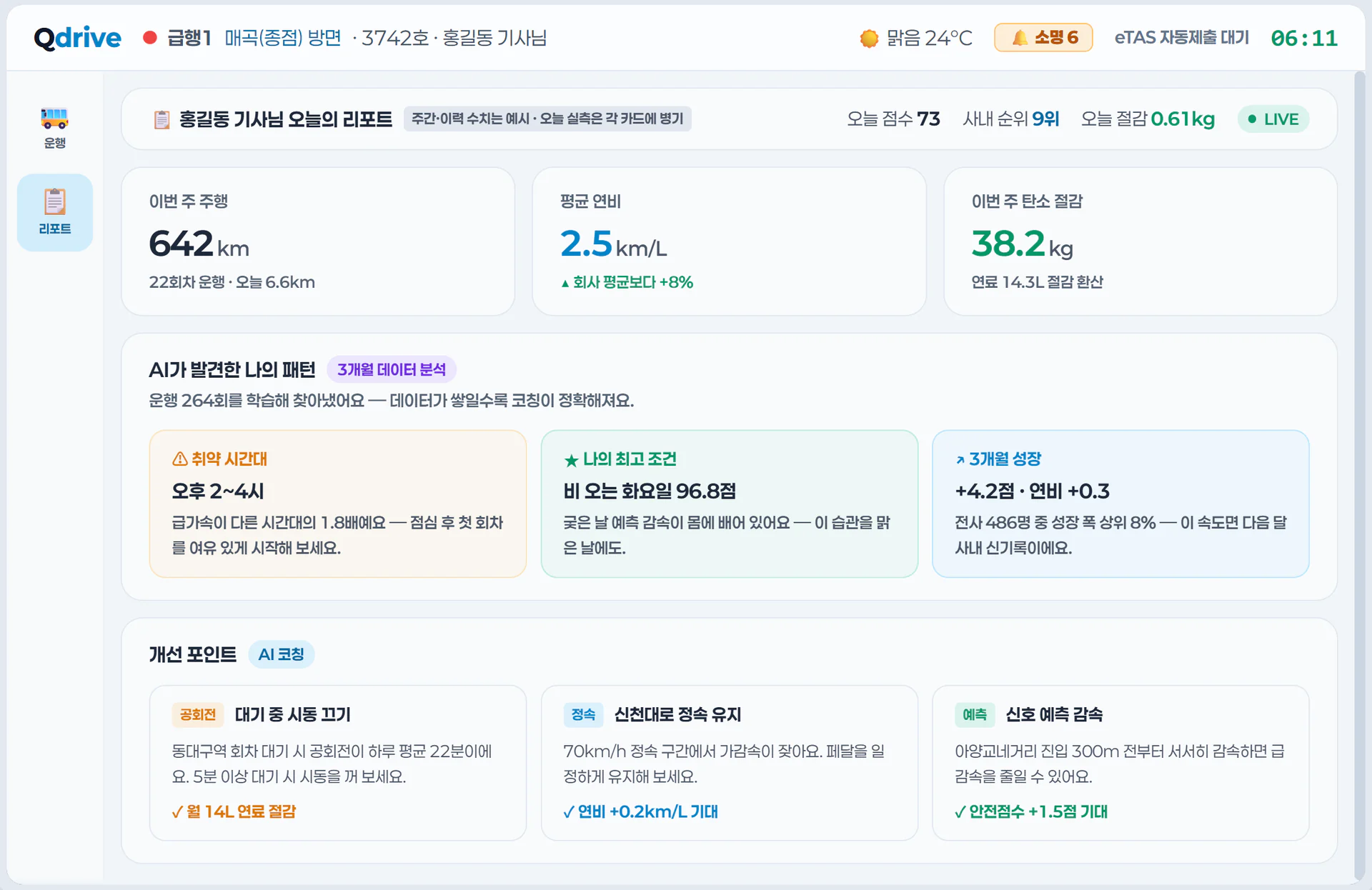
Driver-specific safety coaching
Learn each driver's weak points and good habits from trip history, then show practical improvement actions and their expected benefit.
- Weekly performance summary
- See distance, average fuel economy, and carbon reduction in one view
- My pattern analysis
- Find weak time periods, best conditions, and improvement over time from trip history
- Actionable coaching
- Pair actions such as reducing idling, keeping a steady speed, and anticipating signals with expected impact
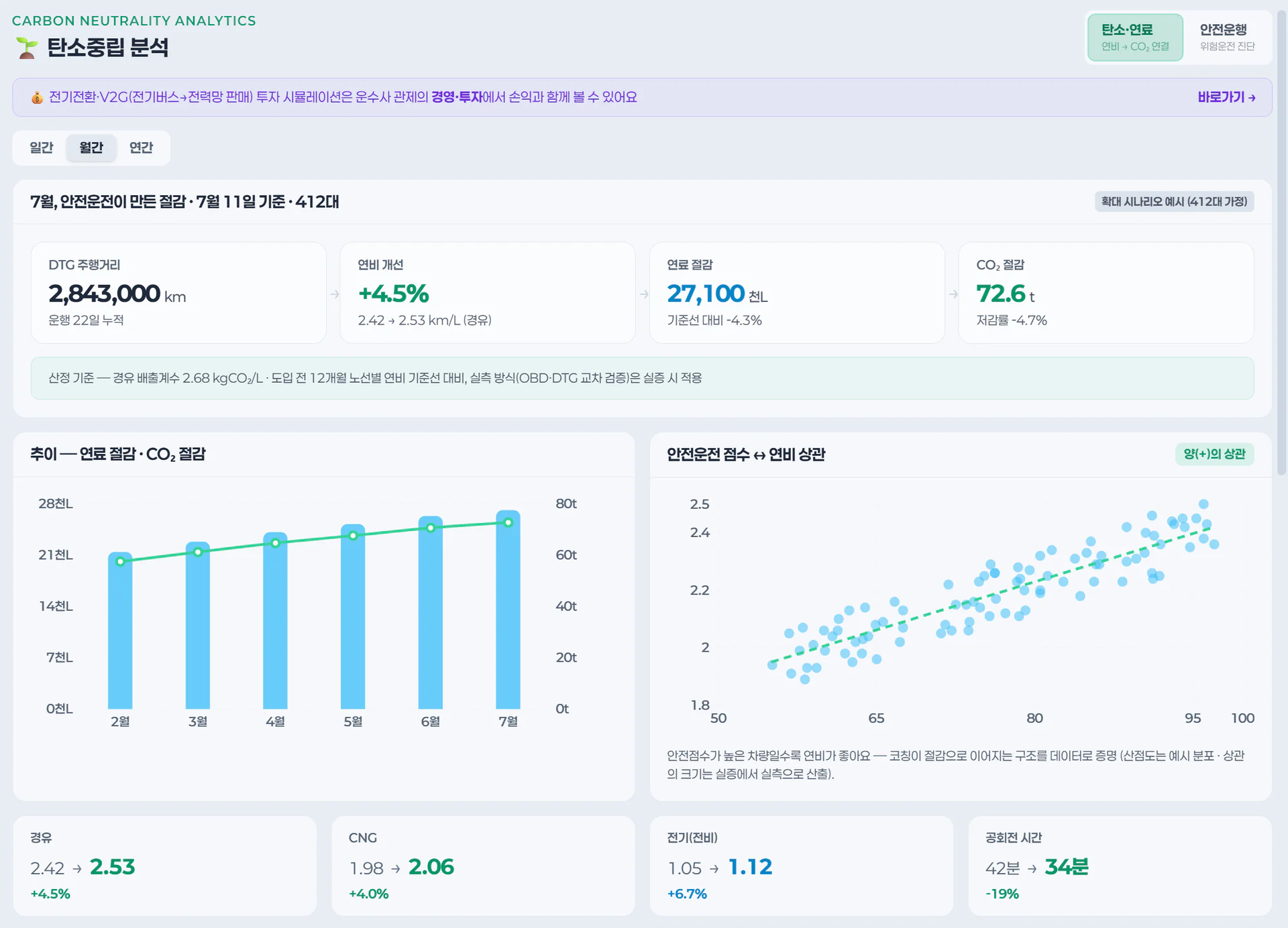
Carbon analysis and impact validation
Calculate avoided emissions from DTG distance and fuel economy, then retain the methodology and cross-checks behind every reported figure.
- Distance and economy basis
- Calculate fuel and CO₂ reductions from DTG distance and fuel-economy improvements
- Safety ↔ economy
- Analyse how driving habits correlate with fuel economy
- Baseline validation
- Compare the pre-rollout baseline and cross-check with OBD and DTG data
Standards & Data Integration
Everything the vehicle and the operation produce, on one standard
Driving, diagnostic, location, communication and charging data joined by standard, ready to analyse and act on.
| Data | What is collected | Device | Standard / interface |
|---|---|---|---|
| Trip records | Speed, RPM, distance, harsh acceleration and braking, driving habits | Digital tachograph (DTG) | Tachograph standard · serial, USB |
| Vehicle diagnostics | Engine, fuel, battery, fault codes, consumable condition | On-board diagnostics (OBD) | OBD-II PID · CAN·CAN-FD |
| Position and movement | Live coordinates, speed, route and route sections | GPS, GNSS and precise-positioning receivers | NMEA 0183 · RTK·RTCM |
| Data transmission | Vehicle, sensor and operational data sent live | In-vehicle gateway and communication module | LTE Cat M1 · MQTT·HTTPS |
| Energy and charging | Battery condition, power use, charging sessions, charge plans | BMS, chargers, charging infrastructure | OCPP · ISO 15118 |
| Emissions | Emissions and reductions from distance, fuel and electricity | Driving, diagnostic and energy data combined | GHG Protocol · ISO 14064 |
Business Impact
What QDrive gives you
One view of the fleet
Location, driving and diagnostics, shared by drivers and operations
Safer driving, better maintenance
Risky driving and faults caught early, feeding coaching and maintenance
Energy and charging tuned
Battery and power use per vehicle, tuning charging and deployment
Carbon performance
Emissions from distance and fuel, with each reduction verified
Ideal Use Cases
It suits operations like these
For organisations managing driving, safety, energy and carbon together.

Public transport, shuttles and MaaS
Where many vehicles must be tracked, and safety and service quality managed alongside

Logistics, delivery and field service
Fleets that must cover more ground while spending less on fuel, accidents and repairs
Rental, car sharing and company fleets
Where vehicle condition and usage history need standardising, and safety, maintenance and reporting need structure
EV fleets and charging infrastructure
Where battery and charge state must feed the schedule, and energy cost and carbon reduction must be managed