
Pipeline
Connect controllers, instruments, and operational systems through standard connectors, with edge buffering that prevents data loss during outages.
AI-Ready Data Platform

AI-Ready Data Platform
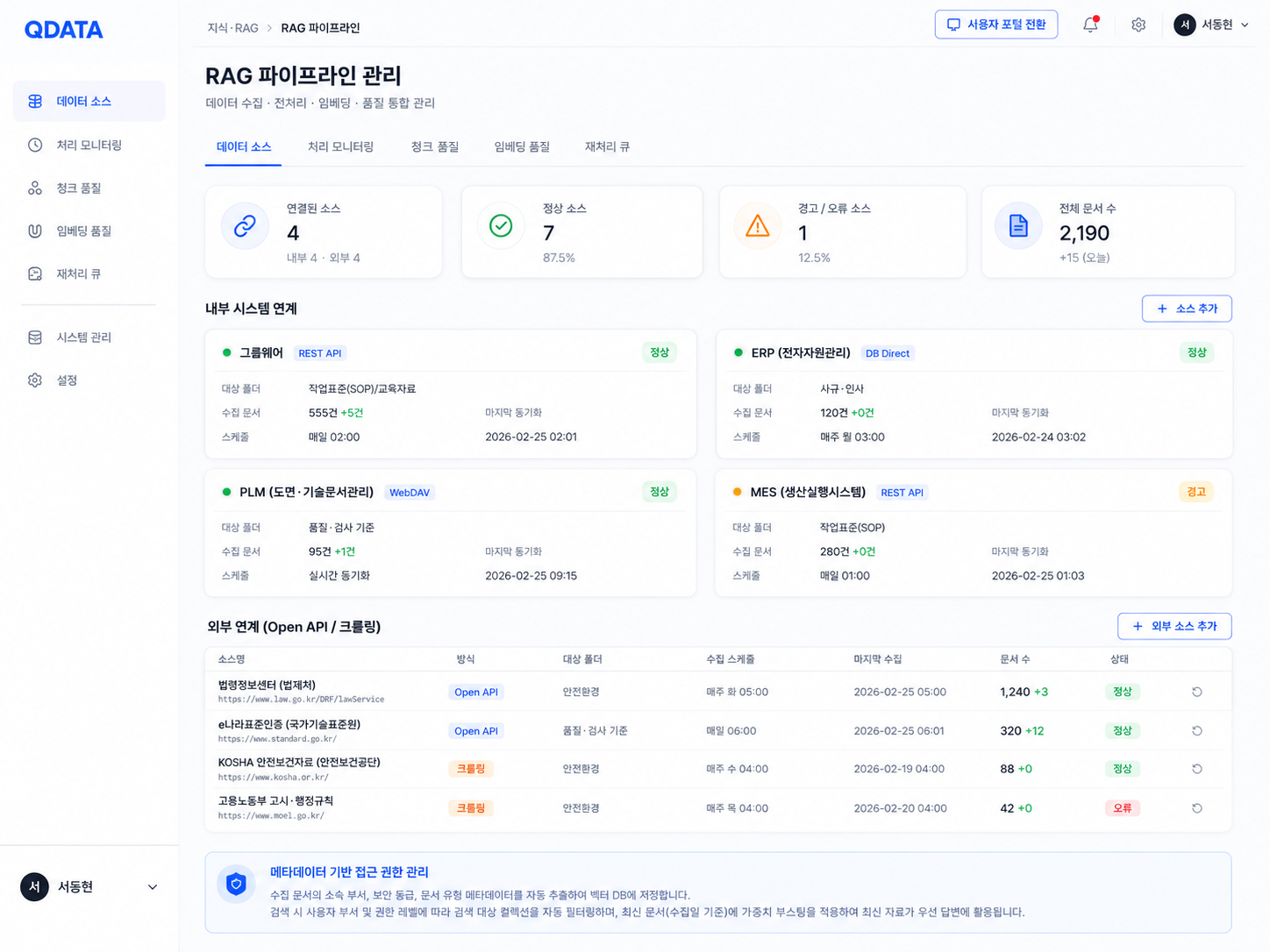
Connect controllers, instruments, and operational systems through standard connectors, with edge buffering that prevents data loss during outages.
Organize documents containing tables and drawings into meaningful units, then turn them into searchable data with OCR and speech recognition.
Unify names and units with a shared data model and terminology while supporting relationships and semantic search.
Track data quality and change history, retraining and validating AI models when the underlying data changes.
Overview


Architecture
Data already available across the organization
ERP · MES · DB · CSV · API
PDF · DOCX · PPT · Email
PLC · Sensors · Time Series · Video
Manuals · Reports · Standards · History
Six steps that turn industrial data into AI-ready data
Collect from multiple sources
Analyze formats and extract structure
Remove duplicates and repair errors and gaps
Align schemas and measurement units
Add domain context and relationships
Deliver consistent, contextualized data
Quality + consistency + context → optimized for AI
Generate purpose-built data from one foundation
Data optimized for retrieval and evidence
Context optimized for repeated reference
Structured data for exploration and aggregation
Generate purpose-built data from one foundation
Evidence-oriented retrieval data
Domain context · policies · manuals · rules
Tables · semantic schemas · features
Instructions · Q&A · fine-tuning datasets
Connect search, recommendation, learning, and operations
Commercial APIs and on-premise small models
Answer with evidence and take action
Anomaly, demand, and quality prediction
Connect decisions to approval and execution
Features
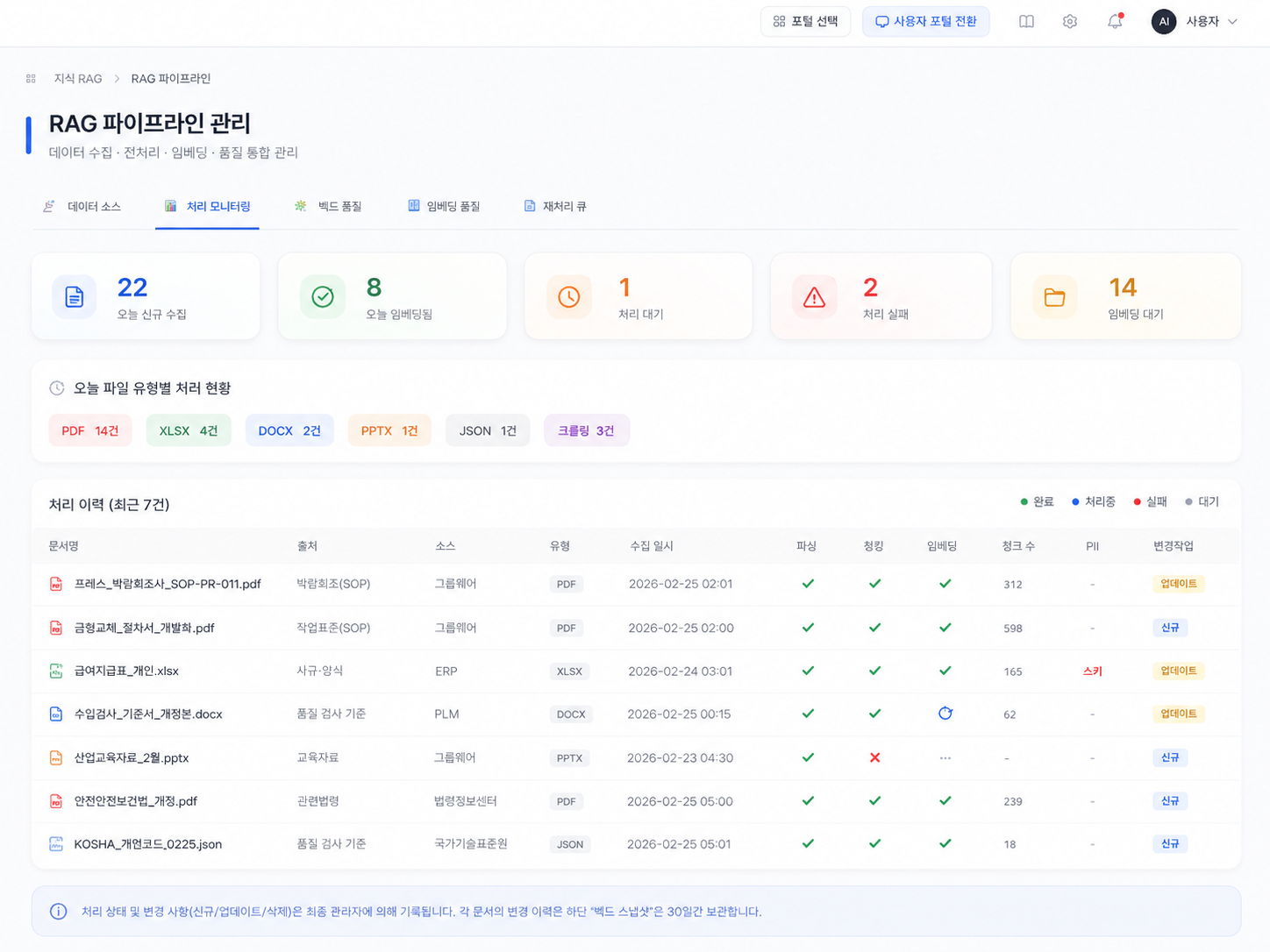
Track every document from initial analysis through search availability.
Document splitting changes retrieval quality. Evaluate each result with measurable indicators.
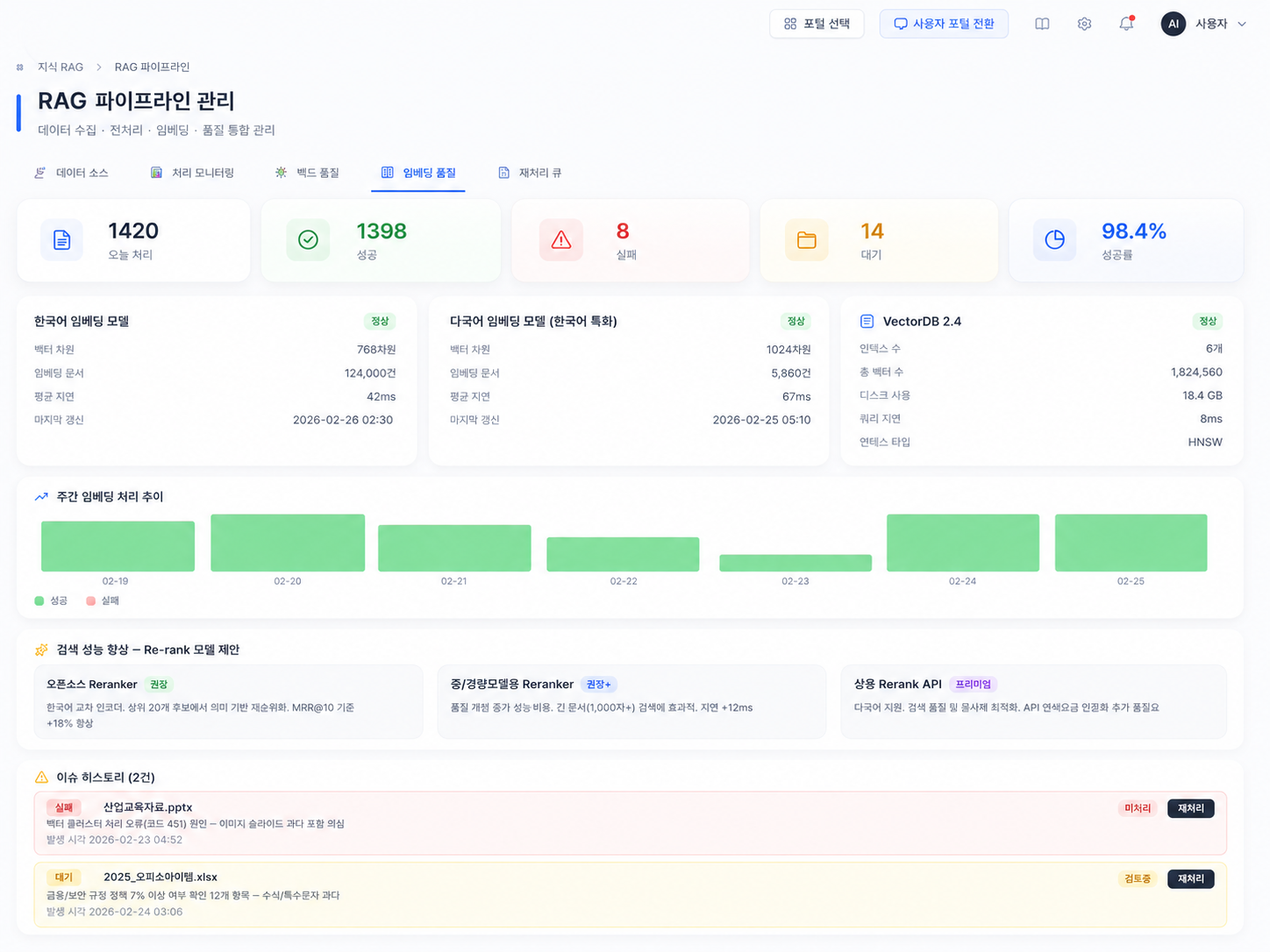
After turning text into searchable vectors, continuously monitor throughput, latency, and indexing.
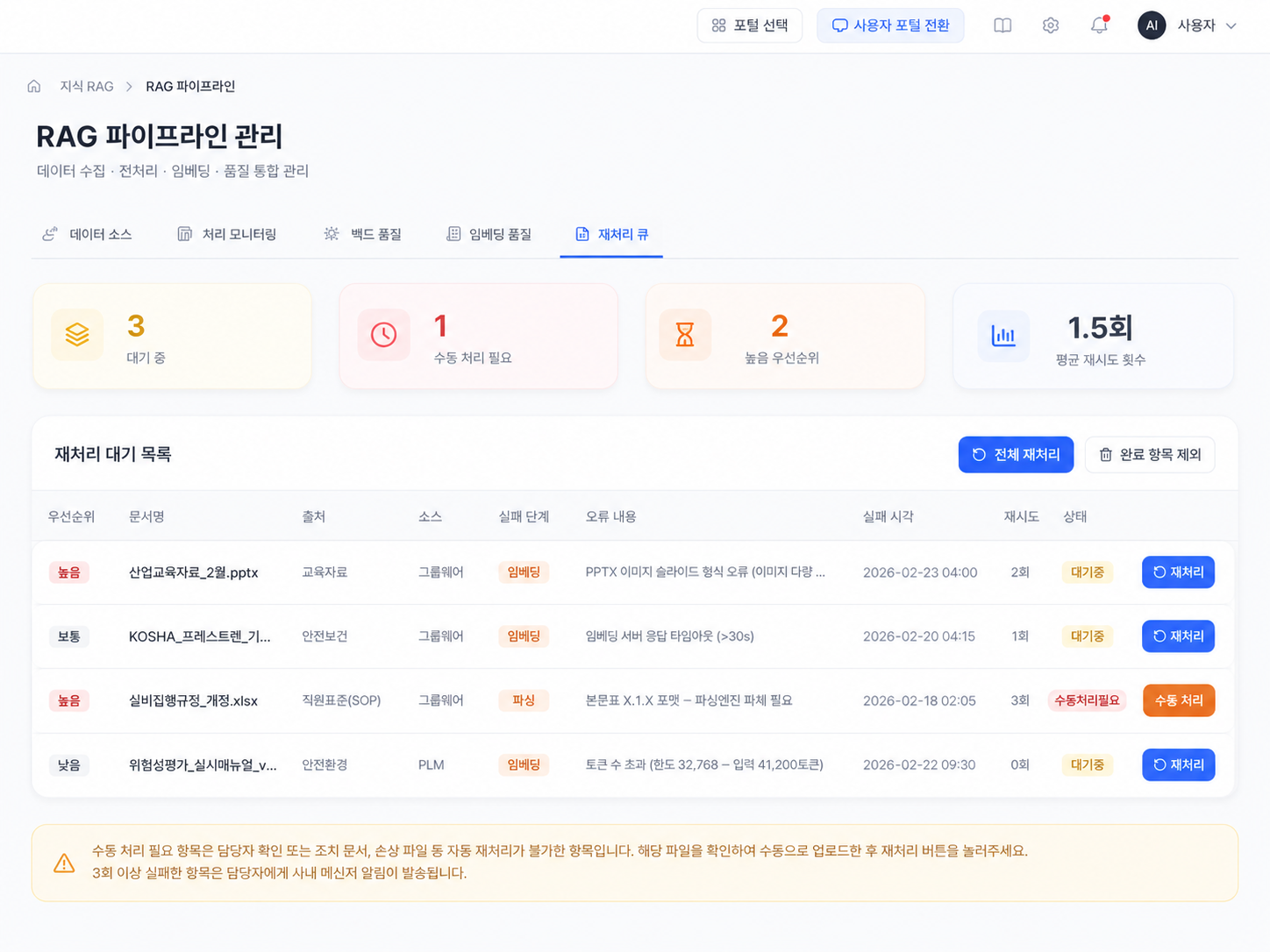
Find documents halted by encryption or size limits and process them again automatically or manually.
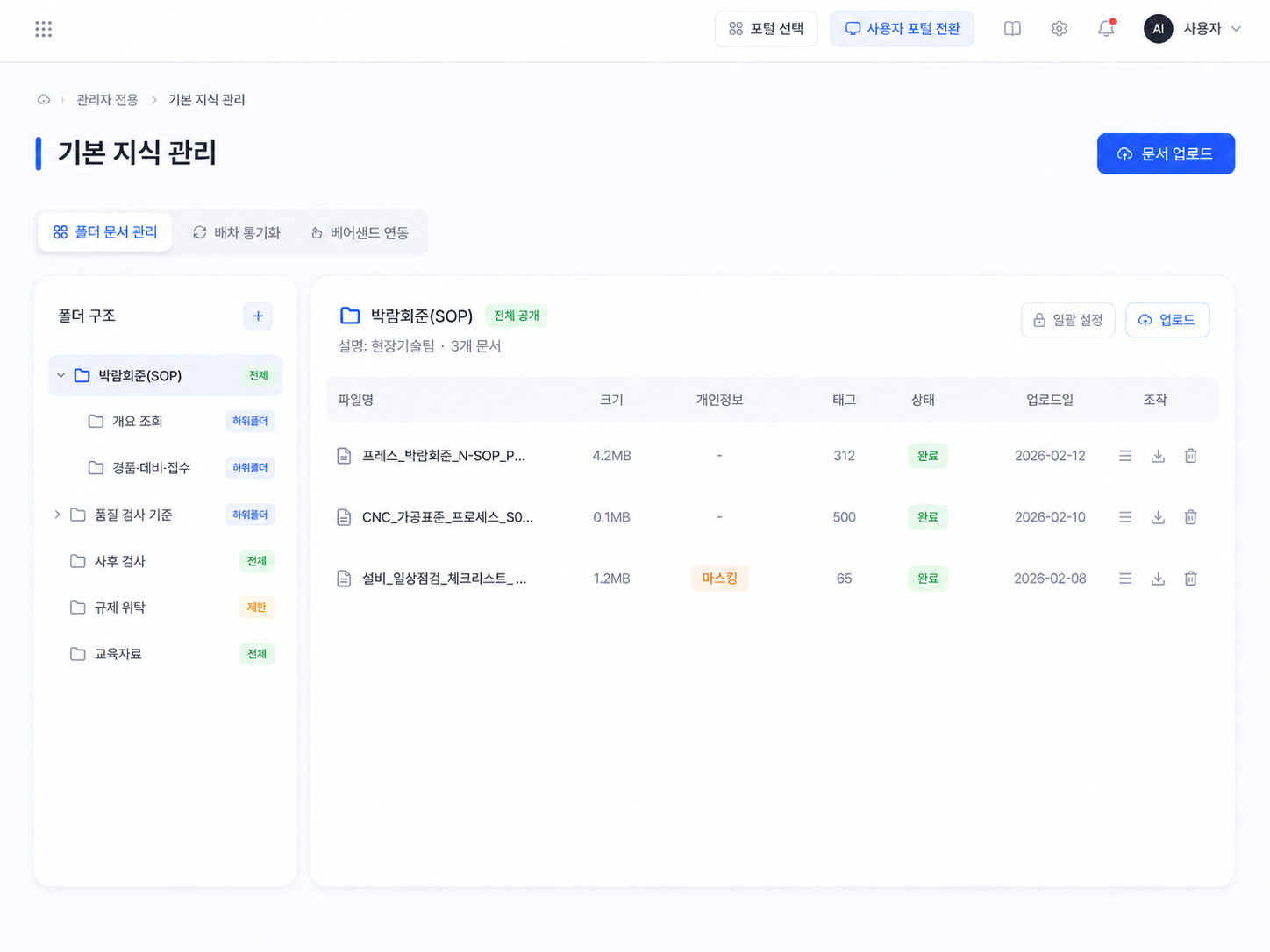
Limit the documents AI can reference by user role and safely mask personal information.
Standards & Governance

Use OPC UA and ISA-95 to integrate heterogeneous equipment data

Track source and trust through catalogs, lineage, and quality rules

Apply data- and query-level permissions with audit logs

Align equipment semantics with international standard models

Automate missing, anomalous, and duplicate data validation
Catalog data assets for reuse across the organization
Ideal Use Cases